mobotmg

Nurturing green employment in Madagascar for people

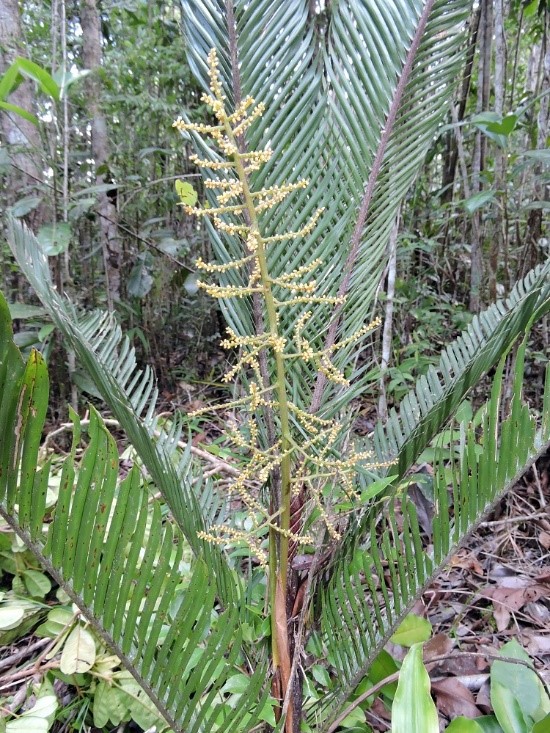
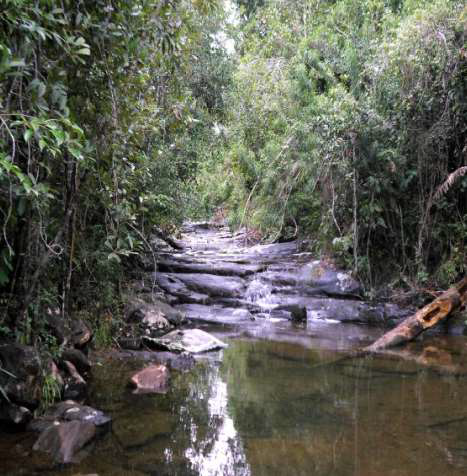
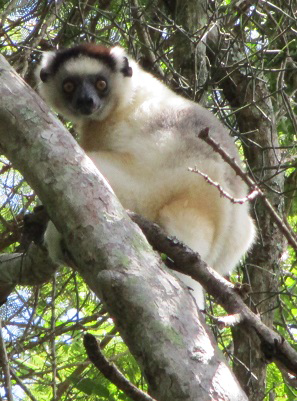
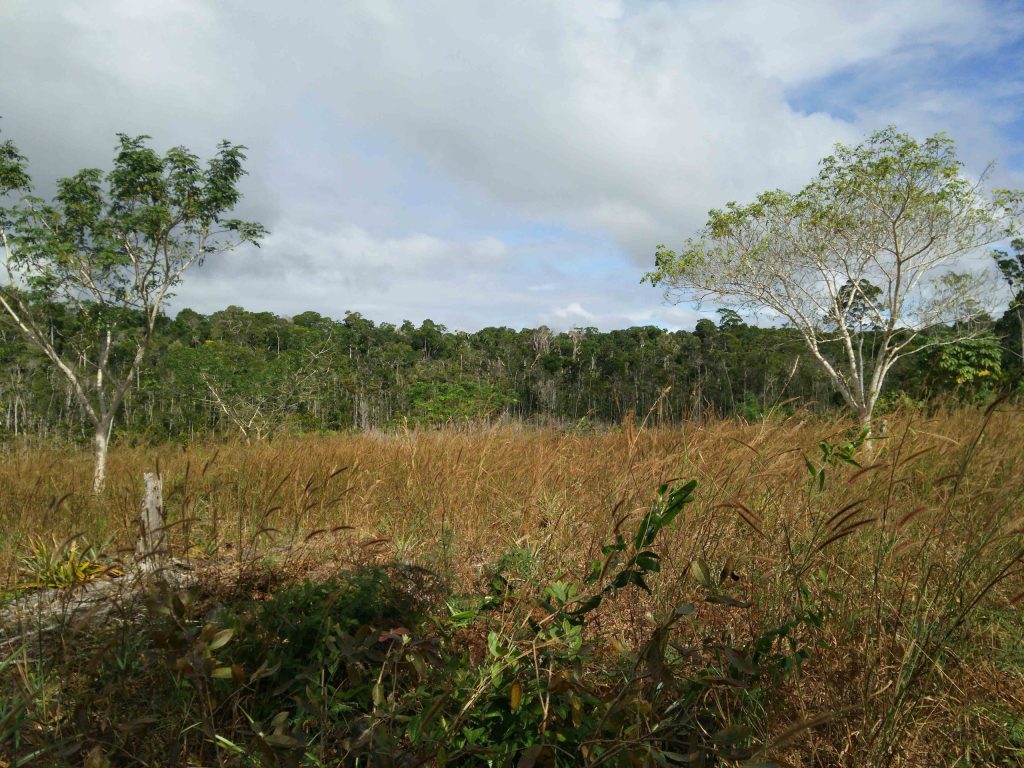
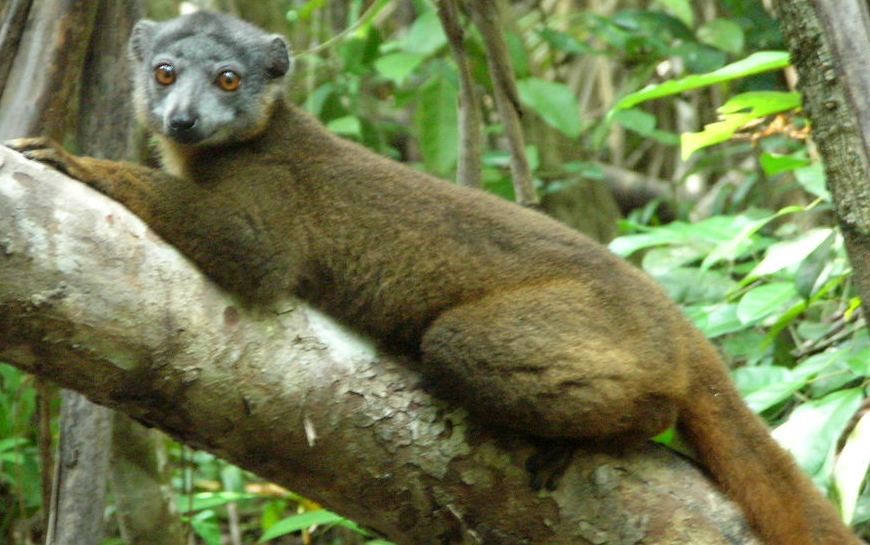
Nurturing green employment in Madagascar for people, plants and prosimians Chris Birkinshaw and Fidisoa Ratovoson June 2022 The Ankarabolava-Agnakatrika Forest, in a forgotten corner of south-eastern Madagascar, whether viewed on the ground or in google earth, is a sad sight: tatty fragments of forest in a landscape otherwise denuded of all natural vegetation.  Not the obvious location for a conservation project.  But, degraded as it may be, this forest vestige is also home, sometimes the only home, for a long and growing list of threatened plants and animals: 32 and six species respectively.  And, these figures are surely under-estimates since the biological inventory of this site is far from complete.  The star residents of this forest are the extraordinarily elegant and critically endangered palm Dypsis elegans and the richly coloured (if drably named) and also critically endangered Grey-headed lemur.  Dypsis elegans This project is funded by IUCN Save Our Species. The contents of this article are the sole responsibility of Chris Birkinshaw (MBG) and do not necessarily reflect the views of IUCN. Missouri Botanical Garden has been supporting the community-based conservation of the Ankarabolava-Agnakatrika Forest since 2009 and our hard-working site-based team have succeeded in preventing further loss of forest due to shifting cultivation and stopped lemur hunting.  However, it is clear that this “swiss cheese” forest will remain highly vulnerable to outside threats (such as wild fires, desiccation, catastrophic winds and alien invasive species) so long as it remains so badly fragmented – thereby presenting a long periphery to the hostile surrounding landscape.  As part of our strategy to address this issue, in 2019 we were fortunate to access a grant from IUCN Save our Species, that enabled us to launch forest restoration of abandoned plots within the forest.  In these plots the soil is so exhausted and microclimate so hot and windy that natural regeneration is sluggish.  Therefore, to speed forest recovery, over the past two years, we supported reconstructive restoration of these areas – a process in which young trees of a diversity of locally native tree species were propagated, out-planted and nurtured.   To date 77,250 young native trees of 74 species (some endangered in their own right) have been produced, out-planted, and provided with post-planting care; and of these 80% have survived and grown.  So, now at the end of this project 22 hectares of formerly barren grassy plots within the forest are bristling with young trees that, with time, will grow to heal wounds of this much abused forest. Restoration zones (shown in white) in part of the forest We now plan to continue this work, launching restoration in new areas, until this forest returns to its robust former glory and, in so doing, provides habitat for rare fauna and flora, as well as benefits for local people. Local people help with restoration

Nurturing green employment in Madagascar for people Lire la suite »

Formation des repésentants des Lonaky A-A

RAPPORT DE FORMATION DES REPRESENTANTS DES MPANJAKA (ROI) DES TROIS COMMUNES QUI ENTOURENT LE NAP ANKARABOLAVA-AGNAKATRIKA DU 04/02/2020 AU 09/02/2020 JAONASY MAËL FRANGIÇO I. INTRODUCTIONDepuis quelques années à cause de la perte inconsidérable des forêts que Madagascar fait face, des ONG ont oeuvré pour chercher toutes types de forêt en fin de sauver les richesse fauniques et floristiques de l’ile que le monde considère comme l’un de pays hotspot dans le monde. La formations de représentants des population locaux pour être le sensibilisateur dans leur villageest l’un de façons de facilité et de bien faire passer des messages que nous voulons faire transmettre aux populations locales si les populations former en question sont respecter par leur villageois et ont la capacité de bien argumenter pendant le moment où ils devraient faire la sensibilisation pour leur village. Nous avons décidé d’appliques ce méthodes dans le NAP Ankarabolava-Agnakatrika pour la protection des lémuriens qu’ils abritent. Le NAP Ankaraboava-Agnakatrika ont un superficie 1577 ha et se trouve dans le district de Vangaindrano. Il est entouré de trois communes dont Matanga ; Tsianofana ; et Vohipaho. Avec des richesses fauniques et des richesse floristiques exceptionnel, ils abritent sept espèces de lémuriens dont un en danger critiques. Pour assurer la survie de ces lémuriens dans ce site il estimportant d’éduquer les populations de l’importances de ces lémuriens dans leur forêt. C’est pour cela que nous avons décidé de former huit (08) populations locales venant de quatre communes aux environs de NAP pour être sensibilisateur dans leur commune concernant la protection de lémuriens dans ce NAP. II. OBJECTIFSNotre objectif pour cette mission c’est de former et donner des connaissances concernant les lémuriens qui existe à Ankarabolava-Agnakatrika aux représentant des populations notamment des rois de chaque commune pour qu’après ils assurent eux-mêmes les sensibilisations dans leur commune dont ils viennent.   III. CHRONOGRAMME DATE ACTIVITE 03/02/2020 Déplacement Antananarivo vers Barabosy Agnalazaha 04/02/2020 Arriver à Barabosy de la NAP Agnalazaha 05/02/2020 Formation théorique des lémuriens d’Ankarabolava-Agnakatrika 06/02/2020 Visite forêt Agnalazaha pour voir des lémuriens 07/02/2020 Visite de forêt de réserve spécial Manombo pour voir des lémuriens 08/02/2020 Evaluations des représentants des Mpanjaka formé et dernierréajustement de le façon de faire la sensibilisation IV. METHODESPour former et éduquer les représentant des Mpanjaka , nous avons fait :1. Présentation sur les 7 espèces des lémuriens d’Ankarabolava-Agnakatrika2. Présentation des importances des lémuriens dans leur forêt Ankarabolava-Agnakatrika :➢ Avantages naturelles (dispensateur des graines, pollinisation)➢ Avantages économiques (touristes, travail, projet)➢ Avantages culturelles (certaines espèces ne se trouve qu’aux environs de Vangaindrano et Farafangana).3. Des visites de forêt dans deux aires protéger (NAP Agnalazaha et reserve special Manombo) pour regarder les lémuriens et pour qu’ils ont une vision plus ouverte.4. Elaboration des poster et des outils nécessaire qui va les aider à s’orienter pendant le moment ou ils feront la sensibilisation dans leur communeEn plus de ces quatre choses, nous avons aussi donner aux représentant les techniques qu’ils devront faire faces a des gens pendant la sensibilisation. V. RESULTATS V.1. Acquisitions des Connaissances générales et importances des lémuriens d’Ankarabolava-Agnakatrika par le représentant des mpanjaka.Pendant quatre jours, nous avons pu éduquer et former huit (8) populations locales qui sont des représentant des Mpanjaka dans le village des trois communes qui entoure les NAP Ankarabolava-Agnakatrika. Voici ci-dessus leurs noms avec leurs communes respectives et leur contacte : NOM ET PRENOM COMMUNES FOKONTANY Numero tel Florent Antoine Tsianofana Tsianofana PROSPER Tsianofana Vohitsoa RAZAFIVELONORY Vohipaho Vohipaho MAROTIA Seraphin Vohipaho Vohipaho TABIRAO Matanga Tahavola BOTOMAZAVA Simon Matanga Matanga centre DORETSY Ampataka Tanamboa II Monja Gilbert Matanga Tavivola 1 : Tableau montrant les informations des huit repressentant de mpanjaka Après avoir passé quatre (04) jour pour donner les connaissances nécessaires concernant les lémuriens d’Ankarabolava Agnakatrika et les techniques pour sensibiliser aux huit (08) représentant des 4 communes, ils ont bien appris et ont acquis les connaissances générales des lémuriens qui existe à Ankarabolava-Agnakatrika qui sont les suivant : A. Les 3 lémuriens nocturnes d’Ankarabolava-Agnakatrika :▪ Avahi ramanatsoavanai▪ Microcebus rufus▪ Cheirogaleus major▪ Daubentonia madagascariensisNB : Daubentonia madagascariensis a été cite ci-dessus et va être représenter dans le livre par ce que les populations ont affirmer avec certitudes qu’ils ont cette espèce dans leur forêt. B. Les 3 lémuriens cathémérale d’Ankarabolava-Agnakatrika :▪ Eulemur cinereiceps▪ Eulemur collaris▪ Hapalemur griseus Les représentants ont aussi reçu les savoir concernant l’importances que les lémuriens jouent et peuvent jouer au futur dans leur commune à savoir : ➢ Importance écologique : Disséminateurs de graines, pollinisateur des arbres, équilibres écologiques Explications au population locaux : plantes naturellement des arbres qui devient après quelques années des forêts qui assure la protection de leur sol et facilite la formation de la pluie dans leur commune➢ Importances économiques : Attire des chercheurs et des bailleurs et possible dans le futur lointain des touristes. Explications au populations locaux : comme ces sont des richesses qui peuvent rester intacte pendant des générations en génération, en plus de ce que MBG fait déjà actuellement dans le site ils peuvent avoir dans le futur des avantages plus important a cause seulement de ces lémuriens.➢ Importances culturelles : les lémuriens existent seulement à Madagascar et que face au différence écorégion avec les multiples microclimats qui se trouve ici, il y a certaine espèce qui se trouve que dans des endroits très restreint comme le cas de Eulemur cinereiceps qui ne trouve dans leur partie (Farafangana et Vagaindrano). Explications aux populations locaux : les lémuriens qui se trouve dans votre forêt sont votre héritage de votre région et votre ethnies et l’héritages de vos descendant par ce que l’espèces qui existe dans votre forêt ne se trouve pas dans e forêt de Diego-Suarez. V.2 Echange de vision et apperceptions des lémuriens dans le foret d’Agnalazaha et dansle réserve spéciale manombo :Lors de formation, nous avons visité deux Aire Protégées pour faire voir aux populations locales former les lémuriens dans leur nature et aussi pour qu’ils auront des échanges avec d’autre populations locales dans d’autres aires protéger. Cela leur permettrait d’avoir une vision plus large de l’importances de leur lémurien dans leur forêt. Nous avons visite en premier lieu leNAP Agnalazaha. Pendant notre visite, les représentant des mpanjaka ont pu observer deux espèces de lémuriens (Eulemur cinereiceps et Avahi ramanantsoavanai) et ensuite nous avons visité la réserve spéciale de Manombo et pendant notre visite

Formation des repésentants des Lonaky A-A Lire la suite »

Status of three threatened lemur species at the Analavelona Scared Forest

STATUS OF THREE THREATENED LEMUR SPECIES AT THE ANALAVELONA SCARED FOREST, SOUTH- WESTERN MADAGASCAR JAONASY MAËL FRANGIÇO & CHRIS BIRKINSHAWJanuary 2021 Fig. 1. Propithecus verreauxi (Verreaux’s Sifaka) at Analavelona Fig. 2. Lemur catta (Ring-tailed Lemur) at Analavelona Fig. 3. Eulemur rufifrons (Red-fronted Brown Lemur) at Analavelona The Analavelona Forest (4487 ha), Sakaraha is a very rare example of evergreen western forest (Moat and Smith, 2007). This sub-humid vegetation exists here in the sub-arid SW of Madagascar due to the forest’s location on a modest massif that has an orographic effect causing a significant but very localized increase in precipitation. In addition to Analavelona’s diverse flora that includes several threatened and locally endemic species, the site provides habitat to an important albeit still poorly known fauna including 7 lemur species (Goodman et al. 2018). Perhaps because this sub-humid forest is so remarkable within an otherwise sub-arid landscape, the local Bara people believe that it shelters the spirits of their ancestors and thus, under the influence of local kings called Lonaky, it has been respected and entered the 20 C. in almost pristine condition. However, now, the outside world has begun to under-mine the Lonaky’s influence as evidenced by a few, previously inconceivable incidents of timber exploitation occurring within the forest. Of more immediate concern, however, is the loss of forest due to wildfires. The Analavelona Forest is located in a landscape dominated vast lush grasslands. Towards the end of the dry season these grasslands often burn and, when stoked by strong winds, the fires can penetrate into the forest. Missouri Botanical Garden’s Madagascar Program has been supporting community based conservation at the Analavelona Forest since 2009. From 2009 to 2015, MBG staff worked to complete the necessary research, complete consultations with local stakeholders, and compile the dossier requesting the designation of the site as a New Protected Area. The dossier was accepted by the diverse stakeholders and the site was designated as a new protected area, by government decree, in May 2015. While MBG has a good knowledge of Analavelona’s remarkable flora of this site, our understanding of the fauna is much less complete, yet as co-managers of this site we are responsible for the conservation of resident animals as well as plants. Hence between April 2018 to November 2020 we were pleased to be able to complete a detailed study of the status at Analavelona of three diurnal lemur species: Propithecus verreauxi (Verreaux’s Sifaka, Fig. 1.) classified as Critically Endangered (A2cde+3cde+4cde) (Louis et al 2020), Lemur catta (Ring-tailed Lemur, Fig. 2) classified as Endangered (A4cd) (LaFleur and Gould 2020) and Eulemur rufifrons (Red-fronted Brown Lemur, Fig. 3) classified as Vulnerable (A2bcd+3bcd+4bcd) (Johnson et al 2020). Our approach to providing this information was to recruit two local people (Ruffin and Tsimeloke) who we trained in lemur identification and ecology and the study protocols. The team marked out 26 transects totalling 46.095 km in all different sectors of the forest so as to represent the forest as a whole. Each transect was measured and mapped using a GPS Unit (Fig. 4). Then, each month from July 2019 to August 2020, the team slowly walked each transect and counted the lemurs of each species that they encountered. By also recording the perpendicular distance of the lemurs from the transect, it was possible to estimate the density of each lemur species in the forest, then, from the area of the forest, their abundance was estimated. In total, the teams walked the equivalent of 983.491 km during the study. Figure 4. Distribution of the study transects within the Analavelona Forest donated by coloured lines. Note also the distribution of villages – especially in the valley to the west. Both P. verreauxi and E. rufifrons were seen quite regularly during the transect walks but L. catta was never recorded. Analysis of the data collected for the former two species reveals their density within the protected area to be 14 individuals/km² and 49 individuals/km² respectively. Elsewhere density estimates for P. verreauxi include 41 individuals/km² in Kirindy Mitea National Park, 150–200/km² at Berenty, and 400–500/km² at Antserananomby (Mittermeier et al. 2010); whereas for E. rufifrons estimates include: 6.75 individuals/km² at Ranomafana National Park (Wright et al. 2012); 1.95-4.90 individuals/km² at Andringitra National Park (Rajaonson et al. 2014); 23.9/km² at Antseranomby (Kelley et al. 2007) and 20-30 individuals/km² at Kirindy Mitea (Mittermeier et al. 2010. From the estimates of density and the area of the Analavelona Forest the abundance of P. verreauxi and Eulemur rufifrons within the Analavelona Forest can be estimated as 628 and 2199 individuals respectively. Given that as a rule of thumb, conservation biologists consider that animal populations with less than 500 individuals may be a risk of inbreeding, the relatively small population of P. verreauxi is a matter of concern. It is very possible that there is movement of animals to and from the Analavelona Forest and other forest fragments in the neighbouring landscape and clearly, MBG, as co-managers of this site, need to consider methods of maintaining and facilitating this movement in the future such as reinforcing forest corridors. Such movement would promote out-breeding. While we never encountered individuals of L. catta during the transect walks we did see this species within the Analavelona on a few occasions in the western part of the forest while walking to and from camp. It would thus seem that this lemur either very rare within this forest or perhaps only occasionally present – moving into the forestfrom elsewhere at certain times of the year. Thus, both the importance of Analavelona Forest for this species and indeed the status of Lemur catta within the forest remain uncertain. Funding permitting, we hope to investigate this matter further. Figures 5 and 6 show the distribution of P. verreauxi and E. rufifrons within the Analavelona Forest. While species occur throughout the forest there seems to be a general tendency for greater abundance in the eastern part of the forest compared the western part. This may be explained by the closer

Status of three threatened lemur species at the Analavelona Scared Forest Lire la suite »

No trees no lemurs

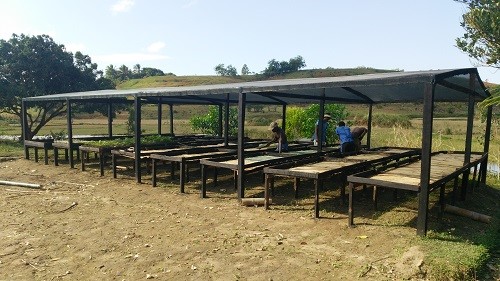
No trees = no lemurs Forest restoration for the White Collared Lemur at Ankarabolava-Agnakatrika, Madagascar Missouri Botanical Garden: the clue is in the name really!  We love plants – everything about them: we love unpicking their evolutionary relationships, we love to describe how they mould themselves to their environments, we love discovering how best to propagate and grow them but, most of all, we love simply revelling in their beauty.  With our passion for plants it may come as a surprise that in Madagascar, in addition to plant conservation, we are doing our bit for lemur conservation too.  Currently MBG’s Madagascar Research and Conservation Program is supporting community-based conservation at eleven priority areas for plant conservation.  While these sites support extraordinary plant diversity, we estimate that they provide habitat to some 35 species of lemur too.  At seven of these sites our interventions include work to restore forest where it has become critically degraded.  One of the locations where forest restoration is a priority is the 1553-hectare Ankarabolava-Agnakatrika Forest in south-eastern Madagascar.   In April 2020 we were pleased to receive a grant from IUCN Save Our Species, not really for plant conservation, but rather to improve the forest’s integrity as habitat for the critically endangered White Collared Lemur – considered to be among the World’s 25 most threatened primates.  Our aim in this project is that during 2 years we will provide support for local people to propagate 50,000 young plants of native trees and then plant them to launch forest restoration on 20 hectares of abandoned agricultural plots that currently perforate the forest like a Swiss cheese. The launch of this project had a shaky start coinciding with the beginning of the corvid-19 pandemic in Madagascar and the associated government lock down.   However, as soon as travel restrictions were lifted, MBG staff members, Fidy and Nambinina, purchased materials and mobilised teams to build four large tree nurseries – each located in a different village close to different parts of the forest.  The nurseries were built to high standards with propagation tables, rooves of shade netting and fences to exclude free-ranging cows – providing the perfect environment for propagating trees and a pleasant working environment for humans.  Parallel with the installation of the nurseries, David, an experienced horticulturalist, trained under a Darwin Initiative project at Parc Ivoloina (see https://www.madagascarfaunaflora.org/darwin-initiative.html), himself became a trainer and recruited eleven local people, both men and women, and trained them in best practice for propagating native trees.  However, there can be no seedlings without seeds, so two more people were recruited, trained as seed collectors, and tasked with roaming the forest to seek seeds of the target tree species. Now, six months after the receiving the grant, and despite the pandemic, we are proud to report that at Ankarabolava-Agnakatrika we have developed significant capacity for producing young trees of native species – indeed currently there are 7604 plants of 15 different trees species in the nurseries.  All being well, by the end of the year, we will have at least 50,000 young trees and then the only challenge will be to organise forest picnics for 1000 local youth to learn about lemurs and plant these trees.   This project is funded by IUCN Save Our Species. The contents of this article are the sole responsibility of Chris Birkinshaw (MBG) and do not necessarily reflect the views of IUCN. Newly constructed tree nursery close to Ankarabolava-Agnakatrika Forest (photo by David Rajaonarivelo) Chris Birkinshaw October 2020 As these trees grow they will not only increase the area of the forest but also improve its integrity thereby helping the lemurs to flourish.  And, while lemurs certainly need trees, most Malagasy trees also need lemurs to spread their seeds enabling colonisation and regeneration.   Thus in reality this project is all about nurturing a healthy ecosystem for lemurs and plants, and, yes, people too.

No trees no lemurs Lire la suite »

Grant-award-for-forest-restoration

GRANT AWARD We are pleased to announce that Missouri Botanical Garden’s Madagascar Research and Conservation Program has received a grant from IUCN Save Our Species for a project titled “Mobilizing local youth to conserve Eulemur cinereiceps at the Ankarabolava-Agnakatrika Forest, Madagascar”.  This 2-year project is summarised below. Eulemur cinereiceps photo by Ludovic Reza The White Collared Lemur, Eulemur cinereiceps, is critically endangered and known from just four protected areas in a small part of SE Madagascar.  One of these sites is the 1553-hectare Ankarabolava-Agnakatrika Forest where Missouri Botanical Garden has supported community-based conservation since 2009.  This forest is compromised as lemur’ habitat because of the presence within its limits of agricultural plots belonging to 78 farmers.  Previously, these farmers, who have traditional occupancy rights, were offered title to equivalent plots of land outside the reserve in exchange for abandoning their land within the forest.  To date some 60 farmers have accepted this offer thereby releasing 63 hectares of land.  In this project we will propagate 50,000 seedlings of native tree and shrub species including key food plants for E. cinereiceps and then work with local youth to plant these seedlings on 20 hectares of the abandoned land in the forest where natural forest regeneration is slow. The restoration of this land will increase the area of habitat available for E.cinereiceps and improve the integrity of its habitat.  The planting events will be valorised to raise awareness of the importance of lemur conservation. Eulemur cinereiceps photo by Ludovic Reza This project is funded by IUCN Save Our Species. The contents of this article are the sole responsibility of Chris Birkinshaw (MBG) and do not necessarily reflect the views of IUCN.

Grant-award-for-forest-restoration Lire la suite »

Reducing lemur hunting at the Analavelona Sacred Forest

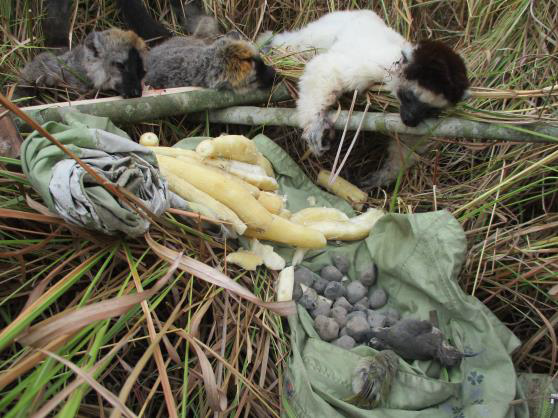
Reducing lemur hunting in the Analavelona Sacred Forest, SW Madagascar by Chris Birkinshaw – April 2020 Whisper it quietly, but Missouri Botanical Garden’s Madagascar Conservation Program is investing in lemur conservation. Currently the Program supports community-based conservation work at 11 Priority Areas for Plant Conservation in Madagascar. Unsurprisingly, in addition to their remarkable floras, all but one of these sites also supports important populations for threatened lemurs. Although primarily motivated by plant conservation, naturally, as responsible managers, we must also care for the animals inhabiting these sites. One of the locations where we are especially investing in lemur conservation is at the Analavelona Forest, in south-western Madagascar. This 4487-hectare forest is a very rare example of sub-humid evergreen western forest (Photo 1). Sub-humid vegetation type exists here, in the sub-arid part of Madagascar, due to the forest’s location on a modest massif that has an orographic effect causing a significant but very localized increase in precipitation. Analavelona has a truly remarkable flora that includes several threatened and locally endemic species, but in addition, the forest provides habitat to an important albeit still poorly known fauna including seven lemur species. Four of these lemur species are classified as Endangered by the IUCN: the Ring-tailed Lemur (Lemur catta); Verreaux’s Sifaka (Propithecus verreauxi); Hubbard’s Sportive Lemur (Lepilemur hubbardorum); and the Pale Fork-marked Lemur (Phaner pallescens). In addition, the Red-fronted Brown Lemur (Eulemur rufifrons) is classified as Near Threatened. Photo 1. The Analavelona Sacred Forest surrounded by vast areas of lush fire-prone grasslands The lemurs are all threatened by habitat loss due to wild fires that are frequent in the grassland surrounding the forest and that sometimes, especially when stoked by brisk winds, penetrate into the forest. However, in addition, the large diurnal lemurs are threatened by hunting (Photo 2.). Although this activity is forbidden by Malagasy law, lemurs are sometimes hunted by the people who live in the landscape surrounding the forest threatening the long term survival of these animals in this isolated and relatively small forest. Photo 2. Hunted Propithecus verreauxi and Eulemur rufifrons at Analavelona In an endeavour to reduce the frequency of lemur hunting at this site we are implementing a two prong strategy. First, when local people help us install firebreaks around the forest we compensate them for their labour with sheep rather than cash, and implore them to raise the sheep and eat sheep meat rather than the meat of lemurs (Photo 3). Photo 3. Some of 160 sheep being herded to a village close to Analavelona – compensation for work to make firebreaks and alternative to lemur meat Second, we are organising lemur-themed events in the villages and hamlets surrounding the forest with the aim of transforming local paradigms concerning lemurs from being a source of meat to being an intriguing part of their natural heritage and a source of fascination and pride. These events were launched on World Lemur Day 2019 and will continue through 2020. They consist of the projection of films about lemurs, a question and answer session, and a quiz in which lemur-themed t-shirts and wrap-around clothes (lamboany) were provided as prizes for correct answers (Photo 4). The events were animated by our staff in remarkably convincing lemur outfits. To date, 1,080 residents including 487 adults and 593 children have participated in these events which have been organised in 8 villages. Further events will be organised in hitherto unvisited villages during May and June 2020, at which time, being the start of the dry season, we will also speak about the responsible use of fire to manage pasture land. We are now monitoring the frequency of lemur hunting at this site to elucidate whether or not these interventions have been effective. Our hope is that lemur hunting will become rare without negatively impacting the diet of those who previously relied on these animals as an occasional source of protein. Photo 4. Lemur awareness-raising event The activities described in this article are co-funded by the IUCN Save Our Species (see https://www.saveourspecies.org/). However, the opinions expressed our ours alone and do not necessarily reflect those of the IUCN.

Reducing lemur hunting at the Analavelona Sacred Forest Lire la suite »

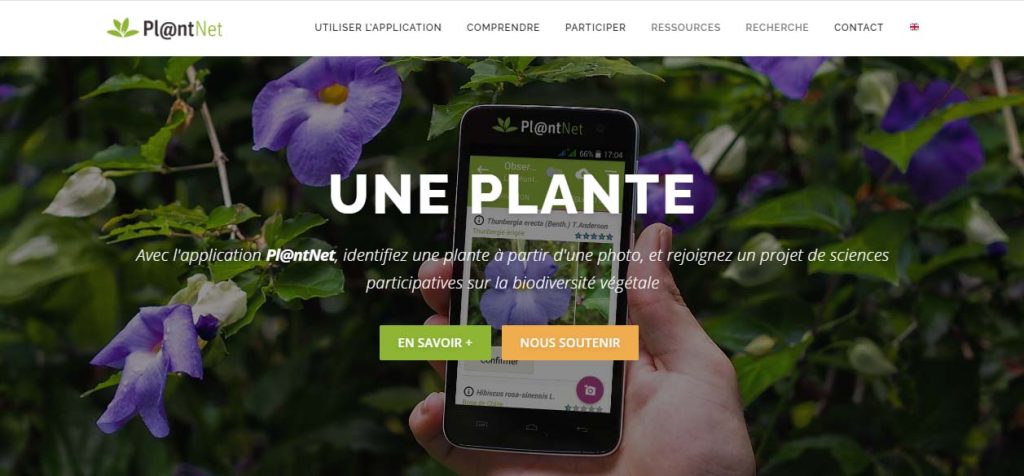
Découverte de Pl@ntNet

Un outil incroyablement complet Pl@ntNet se présente sous deux formes : un site web accessible à l’adresse www.plantnet.org et une application disponible sur le Play Store et l’Apple Store. Extrêmement polyvalente, l’application s’adapte aussi bien à un usage personnel (jardinage, balades, phytothérapie) qu’à un usage professionnel (agroécologie, gestion d’espaces naturels, éducation, tourisme, commerce). Le développement de Pl@ntNet a débuté en 2011, avec une première version de l’application lancée en 2013. Aujourd’hui, l’application compte plus de six millions d’utilisateurs, propose plus de 50 000 espèces illustrées, enregistre plus de 22 millions d’observations (dont plus de 10 millions validées) et plus de 14 millions d’observations géolocalisées. Découverte de Pl@ntNet

Découverte de Pl@ntNet Lire la suite »